
I’ve just got back from a week’s holiday in Greece, and one of the BIG highlights was the food. I think I ate oily fish most days! As a Nutritional Therapist, it’s one of my chief considerations when analysing a client’s diet as so many of us are deficient in the essential fatty acids contained in these miraculous piscines. Having eaten a plate of fresh grilled anchovies only a few days ago, I am minded to write about oily fish, what they are, why they’re good (delicious), and how often to eat them. Note: this is not a post for non-fish eaters perhaps, though I do explore other sources of omega-3 essential fatty acids and discuss supplements.
It has long been established that a Mediterranean diet rich in fresh fruit and vegetables, oily fish and extra virgin olive oil is a healthy one, linked to better heart health, and associated metabolic conditions such as type 2 diabetes mellitus, obesity, and cancer.
Oily fish such as sardines, mackerel, anchovies, salmon and herring (think of the acronym SMASH) are rich in EPA (eicosapentaenoic acid) and DHA (docosahexaenoic acid) which are the major omega-3 fatty acids recognised for their cardioprotective effects. Other fish such as tuna, mussels, trout, and even octopus, also contain these oils, though to lesser degrees. Other health benefits of omega-3 essential fatty acids include joint, nerve, and brain health.
A good ratio of omega-3 to omega-6 (found in nuts and seeds, vegetable oils etc) has an anti-inflammatory effect. Basically, as omega-6 is present in the typical western diet to a larger extent, it is important to consciously introduce omega-3 fatty acids into our diet where possible. Fish is the best source of this, as even though flax seeds and walnuts are two plant foods relatively high in omega-3, they contain omega-6 as well, and the body has some converting to do, whereas with fish all that EPA and DHA is there for the using!
It can be easier than you think to get oily fish into the diet. The cheapest and easiest option is to buy tins of fish and add them to dishes you already enjoy. For example, they make a delicious and protein-boosting addition to any salad, or to any pasta dish (yes, I would even have them with cheese!), topping to any homemade pizza, added to a tray bake, or thrown into a stir fry. You can buy organic and wild-caught branded tins too.
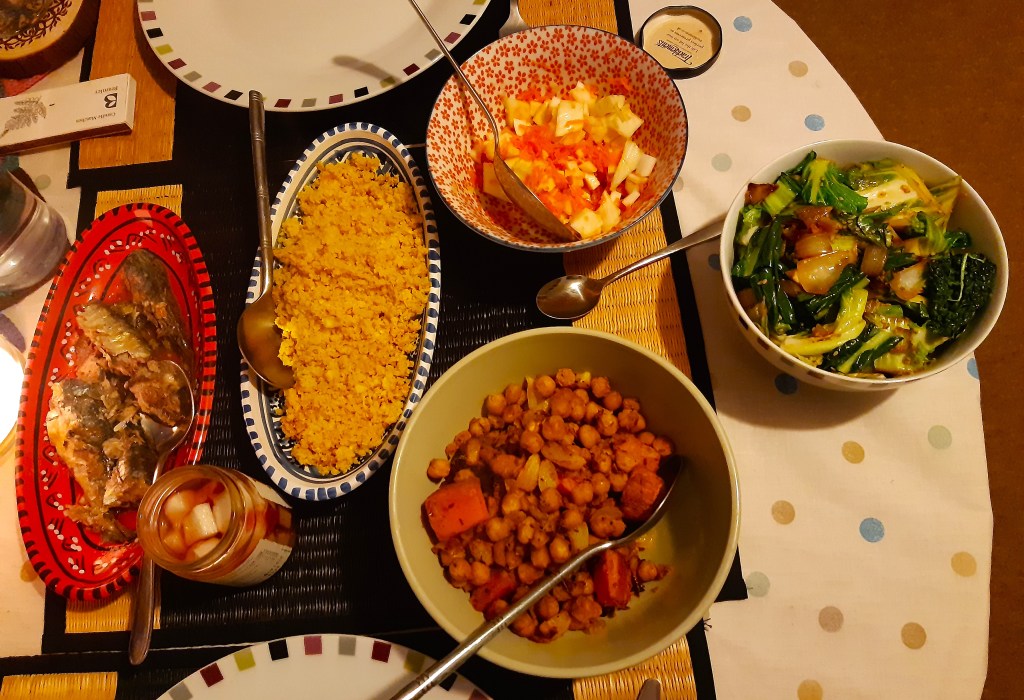
Alternatively, buy from a fish counter and go for organic, wild caught as these will have higher levels of omega-3 than farmed varieties. Farmed salmon is often of substantially poorer quality. Grilled or baked salmon, mackerel or sardines make a scrummy meal of their own, but in smaller portions, they can be added as a side-dish, sprinkled liberally with extra virgin olive oil, lemon juice, a pinch of sea or Himalayan salt and away you go! See pic below for a meal I made of leftovers from the fridge plus a tin of fish I happened to have in the store cupboard.
So what if you just hate the taste of fish? The good news is there are loads of fish oil supplements out there, that can be taken either in liquid or capsule form. The downside of these are that they can be a little hard on the digestion, precipitating fishy burps for quite a while after taking. This is why I personally prefer to get mine through diet. Vegan alternatives also exist – derived from the algae that the fish eat, rather than the fish themselves, so some controversy over their effectiveness exists since it’s not clear how adept humans are at making those all-important conversions.
Honestly, I could wax rhapsodical all day about the beauty of fresh, Greek food, and maybe there’s another blog post or two about eating the diet from the place itself, while the sun is beaming down on you pretty much constantly, for another day. Getting elements of the Mediterranean diet onto your own plate is certainly easier in the summer months, when plenty of similar staples grow quite happily in the more temperate UK, but we also have a tradition of eating oily fish ourselves that has fallen out of favour in recent times. In fact, most people eat none at all! Consider the traditional and amazing fish pie! This used to be a Friday night supper favourite. It takes a while to make, but it is worth it, although go hard on the salmon and easy on the potato for a healthier version. Still, you’ve got to live. I’m not going to ban the potato!
There is one caveat to my cheerleading for oily fish, and that is if you are pregnant or planning to become so. This is because fish contain trace elements of mercury that can be harmful to an unborn foetus. The current advice is to limit to two portions a week in that case, but given the national average, that’s going to be a significant increase for most people. Otherwise, 3-5 portions a week are recommended in order to truly derive their benefits. It’s also worth bearing in mind that the bigger the fish, the more likely it is to contain mercury, which is why you should limit consumption of e.g. tuna to once a week. This is also where supplements can come into their own, as they can have such elements removed.
Nevertheless, oily fish can and arguably should form a notable part of a healthy diet. If you’re a bit of a fish novice, my advice is to get yourself some tins and go from there, as the cooking and filleting part is already done. Over the years, I’ve gone from hardly eating fish, except for tuna in cans added to pasta (still pretty good), to grilling whole fish while whipping up a beurre blanc, and steaming some samphire, thus underlining my middle class credentials (haha)!
If you’d like help really getting a healthy and delicious diet that supports your own specific health needs, please drop me a line on jop.naturalnutrition@gmail.com and we’ll go from there. Also, any oily fish recipe ideas, please comment below. I’d love to hear how you are getting oily fish into your own diet.

 Jo Priest - Natural Nutrition
Leave a comment