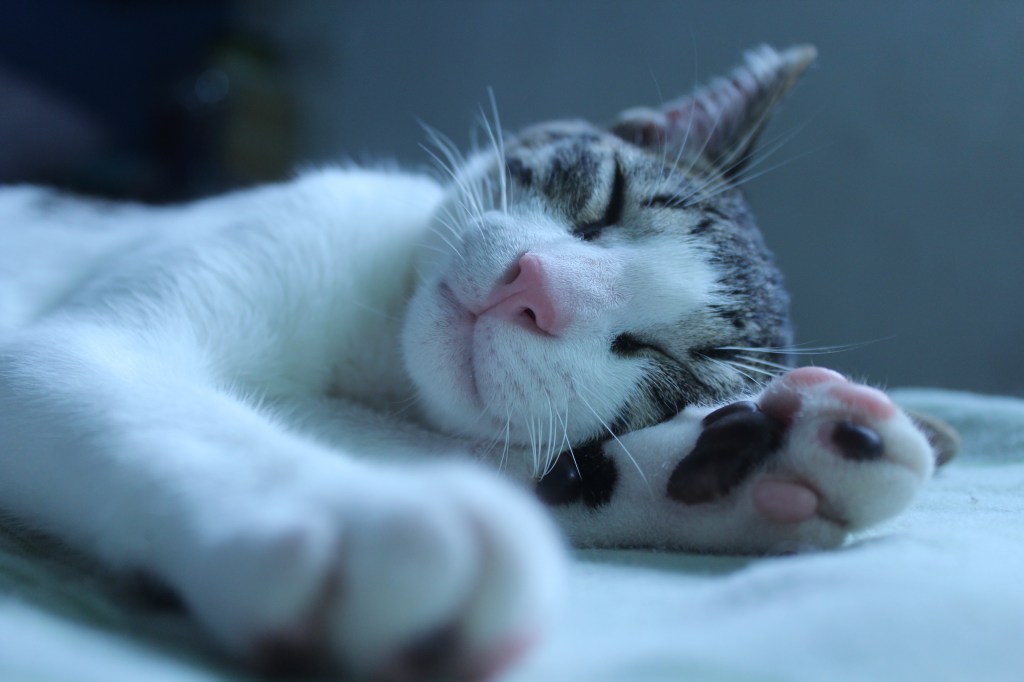
Hot nights and a lot of daylight means sleep is proving elusive right now, as it has done frequently throughout my life. There’s not much I don’t know about sleep hygiene but I don’t always practise it, even though the effects of not enough sleep can be pretty hard to deal with. My insomnia ranges from a little night-waking to not sleeping at all for several nights in a row. When I get to the auditory hallucination phase, that’s when I have had cause to resort to pharmaceuticals (and there is no shame in that if that’s the only thing that will work) but prevention is far better than cure, and establishing a good routine that helps bring about the right conditions for sleep is pretty much a necessity for someone like me.
Why is STRESS the enemy of sleep?
That stress hormone, cortisol, will monkey with sleep like no other. Cortisol works in direct opposition to melatonin – the natural sleep hormone. If you have high cortisol in the evening due to prolonged stress, the chances are, it will interfere with your sleep. Even if you get to sleep okay, the likelihood of waking at night with a whizzing brain is increased, or perhaps you won’t get much of that deep, restorative sleep that means you wake feeling refreshed.
So, managing stress is a real must. Many of my clients, or in fact, pretty much all of them, complain of too high stress levels, exhibiting nervous system dysregulation symptoms, including poor sleep, or feelings of fatigue and low energy. Even if it’s not easy for you to pinpoint the exact cause of stress, it may be that you have some genetic predisposition to a lower tolerance of stress than others. I haven’t personally done any genetic testing but looking at my family history and just knowing myself pretty well by now, I believe there may be something going on for me here. It could be that I have a shorter than average Serotonin Transporter Gene (serotonin converts to melatonin), or a slow COMT gene (the ‘warrior/worrier’ variation), or something affecting my GABA receptors (GABA is the calming neurotransmitter). Who knows? But even if I did know, it might not materially change my circumstances beyond having some explanation for my tendency to ‘spin out’ quite easily. These things cannot be changed but there are two things to bear in mind: a. Your genetics is not your fault and b. You can do something to help yourself through both diet and lifestyle.
Where stress and sleep intersect: Which methods are the best ones for a good night’s rest?
Rather than detail all the myriad ways that stress can be managed, I’m only going to discuss a few that have good evidence for helping directly with sleep.
Progressive muscle relaxation: Tense and relax each muscle group from head to toe.
I remember a particularly harrowing spell of insomnia aged 21 when I was back at my parents’ home from university, working crappy temp jobs that failed to stimulate anything except extreme boredom or a rising feeling of having wasted three years of my life getting a degree if I was to work for £4/hour in the Ministry of Agriculture ‘Special Beef’ section checking the numbers on cow passports at the height of the BSE crisis. Or trying not to get stuck in the rotary movable filing system with one of two incredibly pungent men. I wasn’t sleeping. No siree. Then, one of my equally unfulfilled but rather lovely colleagues gave me a progressive muscle relaxation tape to listen to and follow at night, as her Mum had used it to great effect. Unbelievably, and I really was sceptical, I slept. I remember the hypnotic bass voice of the man intoning ‘relax a little more…’. Special.
4-7-8 breathing: Inhale for 4s, hold for 7s, exhale for 8s — repeat 4–8 times.
I have tried this. Sometimes it works! Sometimes not. It’s like counting sheep but with breaths so occasionally I find the boredom factor actually keeps me awake. I kid you not. My brain is so special, it will react with incredulity that I am getting it to do something so dull. But other people swear by it, so who am I to judge? I sometimes have to do something harder like long division or finding rhymes for words. But generally, breathwork throughout the day is a good way of getting the old nervous system back into shape.
Guided meditation Use sleep-focused sessions.
I have used these or the similar yoga nidra sessions to good effect when experiencing mild insomnia. It’s a nice thing to do. Meditation in general helps keep the brain in good shape. I once went on a part-silent retreat where we would do hour-long meditations, and I actually started to feel euphoria, like I’d taken a naughty drug. Just saying, the brain is a funny thing and there are all sorts of chemicals that can help you have a good time contained within it! I don’t have much of a meditation practice at the moment, but just recalling this is making me want to take it up again.
Journaling: Write down 3 things you’re grateful for or anything weighing on your mind.
I’ve been keeping a regular diary for years now. It can serve as a bit of a mental dump, good if you’ve had a hard day, or even a good day – recalling memories will conjure up the same chemicals as actually having the experience. Aren’t our brains amazing? I tend to write before I go properly to bed but use it as one of my ‘wind down’ routines. I also try to write about things I am grateful for every day. Sometimes it’s a challenge as I don’t always feel very grateful, but I can usually find something.
And now for the diet bit
Would you believe that you can help your brain to rest by providing either the whole neurotransmitter (yes, melatonin is in certain foods), the precursor (the bit before it converts to melatonin) or the co-factors (the stuff you need to help it turn into melatonin)?
Obviously, there’s certain things you should just avoid. Rich, spicy foods that are hard on the digestion just before bed is a no-no. That takeaway lamb bhuna at 10pm is just not going to sit well. Try to time your last meal to end before 7pm to give your body a chance to digest the food and make sure it’s something nice and balanced like salmon, quinoa, steamed green leafies (complex carbs, GABA promoting foods etc, fish is easier to digest than meat etc).
High melatonin foods
Number one on this list are Montmorency cherries. These tart fruits contain one of the richest sources of natural melatonin, and you can get it in juice form from a good health food shop. Other choice fruits are goji berries, red grapes (it’s in the skin) and tomatoes. Nuts like walnuts, almonds, and pistachios are also very high in melatonin.
High tryptophan (precursor) foods
These include poultry like turkey and chicken, pumpkin seeds, eggs, oats, tofu and soy products, and dairy. Eaten with carbs, these absorb better into the brain. If you are still hungry before bed (1-2 hours before), a good snack might be cottage cheese on an oat cake as this is easily digested, or Greek yoghurt with pistachios and tart cherry juice. I have had both of these and I can attest that they both satisfied hunger cravings, didn’t interfere with sleep, and may (though it’s hard to be sure) have helped me sleep better.
Melatonin co-factors
We’re looking for foods high in magnesium, B6 and zinc e.g. leafy greens, almonds, bananas, tuna, salmon, chickpeas, beef, cashews and oysters. For a double whammy, pumpkin seeds contain both magnesium AND zinc, and bananas contain magnesium AND B6. So, bananas with pumpkin seed butter are a co-factor fiesta! It’s worth paying attention to the fact that stress really hammers our supplies of magnesium and B vitamins, so it’s doubly important to make sure you have plenty of them in your diet.
Natural rhythms
Another thing to consider are your natural circadian rhythms. Using red light at the end of the day can help signal to the brain that it is time to rest as, so the theory goes, it mimics the firelight that would have accompanied our ancestors’ journey to the land of nod. Either way blue light is your nemesis, so put that screen away! Really.
I recently did a test to see if I am a lark or an owl (I had my suspicions). It turns out I am neither but a kind of hybrid of the two – an intermediate riser and sleeper. It’s true that I am not great in the mornings but I have definitely seen worse. And I can do a late night on occasion but it’s not the easiest on my system. I have joked that there’s this limited window from late morning to noon that I’m really firing on all cylinders! It’s worth bearing in mind because if it’s possible for you to sleep when it’s natural for you to do so, then you are more likely to avoid the dreaded insomnia. But it can also impact when your digestion is best served i.e. those early risers need to breakfast earlier and stop eating earlier and vice versa.
One final note
The optimal temperature for us humans is 18-20 degrees centigrade which is why hot nights are such tousled, sweaty and unrestful affairs. I am recommending a cool bath with those magnesium-rich Epsom salts to get comfy on these hot, hot nights (ordinarily a hot bath would be recommended but that’s about as welcoming as a hot water bottle while sitting on a grill in a heat wave…don’t do it). And I would say get a book that you’re either a bit unbothered about (boredom is soporific for many) or if you’re like me, one you’re really interested in as then you won’t be able to last more than a page or two. I hope you rest deep and well. And if you have any sleep tips you’d like to share, I’d love to hear them.

 Jo Priest - Natural Nutrition
Leave a comment