Well, not quite. It is what we eat as well. But there’s one or two things worth knowing about the how, why and where of eating food. These factors may be the reason why you have gastrointestinal issues such as heartburn or acid reflux, or why, in spite of eating ‘healthily’, you struggle to lose those extra pounds.
When you eat
Restricted window eating or Intermittent Fasting (IF) has gained popularity in recent years and for good reason. The body needs a decent amount of time to ‘rest and digest’, allowing for other processes like growth and repair to take place, so late night eating is generally not a great idea. This can be challenging if you are a shift worker, for example, so then it becomes necessary to really take care of what you are eating, and trying to give at least 2 hours break before sleep.
Giving yourself a window of eating, anything from 8-12 hours a day – there are more dramatic patterns but these won’t be for everyone – can really help boost metabolism and give your body a chance to clear any wastes that have gathered in your gut or cells. There is evidence to show that IF can favourably influence the microbiome, but there is no doubt it can work wonders in terms of reducing blood sugar and weight loss. A note of caution though – start gradual and do what feels right for you. There is also growing evidence that IF doesn’t have quite the same impact on women than men, thanks to our more complicated reproductive cycles and menopause etc. Cortisol – our main stress hormone – is the enemy of weight loss and good blood-sugar management, and anything too restrictive will result in stress on the body. The ins and outs of this is worth a blog post all of its own, but suffice to say that what works for one person may not work for another.
Grazing and snacking can also be detrimental to the digestive process. Of course, if you’re super hungry (or even ‘hangry’) the odd protein-rich and nutritious snack is a totally okay, but if you’re grazing out of boredom or have got into the habit of evening snacking in front of the TV, you are not giving your body enough time to e.g. build up gastric juices to levels helpful to unlock nutrients from your food, or ‘clear out’, allowing for other key bodily processes to take place.
How you eat
There is a saying that suggests that one should chew each mouthful for as many years one has been on the planet. It’s true that as we age we lose digestive efficiency, and so the mechanical act of chewing helps break things down and starts the digestive process off even before the food hits the stomach. However, if you’re lucky enough to have reached an advanced age, such extensive chewing may not be possible or appealing!20-30 chews is a good number for most, but even that may seem alien to someone who is used to wolfing down a sandwich at their desk in 6 bites/30 seconds. Just be mindful. Being present as you eat, noticing tastes and textures, is in itself a calming practice.
Talking of calm, it is essential to be in a calm state when eating. In our fast-paced lives, all too often, we are eating at desks, standing up, walking, or – and I’m guilty of this too – looking at a screen. If you’re consuming stressful content while eating your nutritious homemade vegetable and bean stew, much of that goodness will be lost as cortisol interrupts the digestive process. This is one of the reasons stress is a major factor in IBS-type conditions. Deep breathing before a meal is encouraged but not always practical. Just try to minimise distraction while eating, or if you really must look at a screen, make sure its showing you something cortisol-lowering like fluffy bunnies gambolling in a field (insert your own benign image here) or something that makes you laugh. But not too much or you might get hiccups!
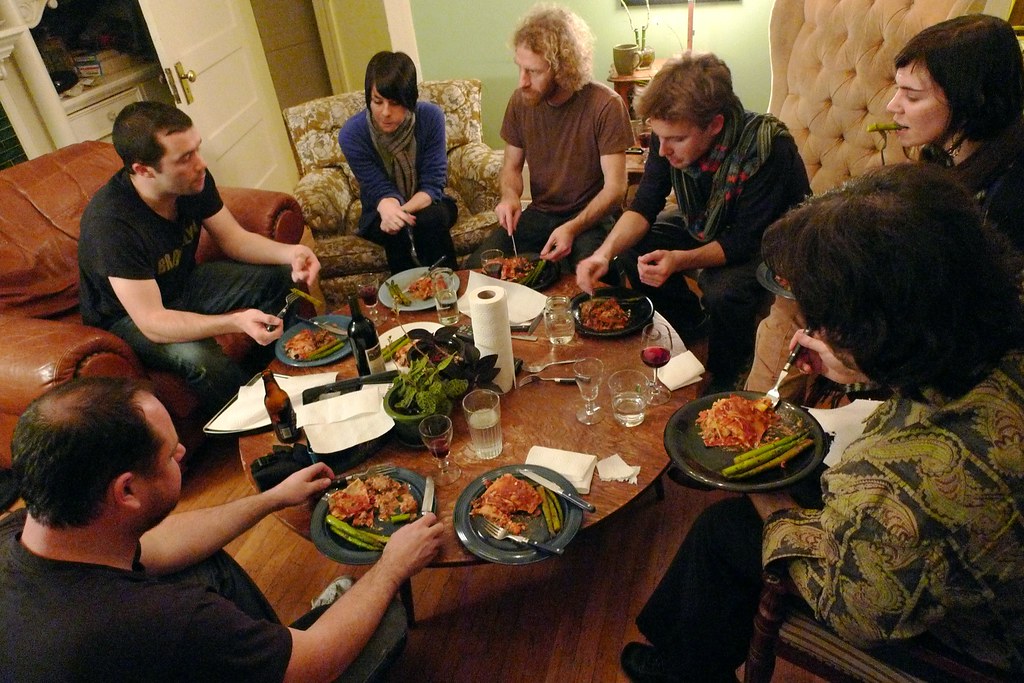
A word about solo eating. Another depressing feature of modern life is how often we eat alone. I’ve written about this in more detail in another blog post but suffice it to say that the more we make meals a social experience the better. It natually boosts our mood, making us calmer and thus making the food go down that much better!
One more thing about the how. Smell. The scent of cooked food is one of the ways we get the juices flowing, preparing the stomach for receiving deliciousness. A microwaved ready meal for one, or a plastic wrapped sandwich just doesn’t cut it. So consider the humble slow cooker which is the absolute optimum in beautiful food aromas. But failing that, just cook!
Why you eat
I touched upon this earlier when I said eating out of boredom can be a real thing. Most of us aren’t short of food and emotional eating can lead to disordered eating. We’ve all done it. When I was living and teaching in Japan in my mid-twenties, I got homesick and my heaviest weight ever and that is not a coincidence. I remember comfort eating a whole big family-sized tin of Danish butter cookies in two days. Not great. I was feeling anxious about being in a foreign country, and I was missing home and my people, so I ate. And I ate. Many of us use or have used food for comfort, to fill a void, to avoid boredom or unpleasant tasks. You name it. We’re wired for connection but if we’re not getting it in our daily lives, we can always go to the biscuit tin, the McDonalds drive-through, the cornershop for the family-sized bar of Dairy milk etc. So, if this is resonating with
you, just ask yourself what you are missing? Why are you eating when you’re not hungry? Do you need the food, or do you need something else? In my clinical practice, I see plenty of people who have tricky relationships with food, and it is so important to address the root causes of eating the naughty stuff, whether that’s a mild case of evening munchies, or a full-blown eating disorder. Sometimes it can be as simple as a more nutritious and blood-sugar balancing swap, but sometimes people will need real therapeutic help that goes way beyond the scope of nutritional therapy practice. But if you can start by getting someone to think about the ‘why’ a bit more, then truly miraculous changes can occur.
All that said, the what is important too. Only eating burgers and doughnuts, even if you make and cook them yourself, in an 8 hour eating window every day, and box breathing before you take your first mindful bite, may not have the wondrous health benefits you desire. But it’s worth putting a bit of thought into the when, how and why. Before long, these things become habit. And that’s when the really good stuff happens.
If you would like to learn more, or if this post has resonated, please comment, or get in touch at jop.naturalnutrition@gmail.com for a free chat about how I can help you on your personal quest for a nutrient-fuelled healthy life.

 Jo Priest - Natural Nutrition
Leave a comment