
‘Christmas is coming, the goose is getting fat…’
Not many of us eat goose these days but like as not, many of us will be wolfing down double portions of turkey, nut-roasts, roast potatoes, sprouts, stuffing, with lashings and lashings of steaming gravy etc. My family is no exception, so I thought I’d give a nutritional perspective on a selection of the usual tasty treats that grace our mid-winter tables – the good, the naughty and the bits in between.
Turkey
Mostly good. Turkey is a lean protein – naturally low in saturated fats, though the darker meat contains more (and more iron too) – and rich in many nutrients, notably B vitamins like B6 and B12 that help with brain and nerve function, and minerals like selenium (immune and thyroid function), zinc (immune function) and phosphorus (bone health).
Turkey, like all meats, contains tryptophan – a precursor to serotonin and ultimately melatonin – the sleep hormone. But you’re probably not going to be sleepy just because you’ve eaten turkey – it’s probably because you’ve overdone it and now the body needs to ‘rest and digest’ with gusto. Also, all those roast potatoes and other root veg contain carbohydrate that helps the tryptophan cross into the brain, so unless you’re eating a plate of turkey and greens alone, this may well explain why you are sleepy post-repast. And just maybe those glasses of wine help with that too.
If you’re a meat eater, try to go for organic and humanely kept animals for many reasons. These include lower chemical and antibiotic exposure, animal welfare, environmental sustainability and potential (though modest) nutritional improvements such as better omega3:6 balance, and overall meat quality.
Nut roasts
If you are a plant-lover, there is only good news here. Nutrient rich, including magnesium (muscle and nerve function), iron (oxygen transport), vitamin E (a key antioxidant), and high in fibre, and healthy, unsaturated fats.
Roast potatoes
A little bit of an in-betweener – the humble potato is rich in vitamin C and potassium but is also a carbohydrate that converts easily to sugar in the body, making it a bit of a no-no for those trying to control blood-sugar or lose weight. However, let’s be real, a roast without the spud is not a fully formed thing. So, if you want to make it a bit healthier, consider the following tips:
- Keep the skins on, especially red or purple potatoes – these contain higher levels of fibre and antioxidants
- Avoid overcooking or burning – any charred bits contain acrylamides – a known carcinogen
- Cook with avocado oil – it’s healthier than saturated fats, and has a high smoking point making it safer for cooking at higher temperatures
- Add a little salt for flavour if there are no health concerns like high blood pressure, but make it a mineral-rich salt like grey or pink salt rather than standard table salt
- Consider replacing some of the salt (or all of it) with herbs. I will be liberally applying garden-grown rosemary to mine as it’s delicious and contains further antioxidants and aids digestion, among other myriad benefits
Roasted parsnips
One of my favourites! And for good reason – if these don’t regularly feature on your Christmas plate, do consider their inclusion for the following reasons:
- High in folate (B9) – good for cell growth and red blood cell formation AND vitamin C
- Despite their sweet taste, they have a lower glycaemic impact than other carbohydrates making them better for blood sugar control
- Contain polyacetylenes – an anti-inflammatory antioxidant
- Roasting helps preserve nutrients (don’t parboil before putting them in the oven) and helps with the caramelisation process that give that sweet taste
- Add an acid e.g. vinegar or lemon juice before serving to aid nutrient absorption
- Adding black pepper increases antioxidant absorption
- And finally, adding rosemary, thyme, or cumin aids digestion and contributes to the great taste!
Brussels sprouts
Ah, the humble and often much-maligned sprout. Personally, I love a good sprout but it’s important to cook them well – nobody loves either a sharp-flavoured bullet or a splurge of sulphurous green mush. My personal preference is to steam them as they retain much of their flavour and bite, but make sure to do it for longer than your average green veg or you will be met with many wrinkled faces around the dinner table – and perhaps one or two lost fillings. At least 10 minutes on a medium-high heat is my rule of thumb and consider halving them to reduce cooking time.
I’ve heard that roasted sprouts are a particularly tasty way to prepare them as this method reduces the bitterness. And it’s also helpful to know, particularly if you’ve been off them since childhood, that newer varieties have been bred to reduce that bitterness that so many children recoil from. However, it’s also worth considering that bitter vegetables stimulate digestive juices better, so it’s all about the balance on your plate.
Some key facts about sprouts:
- High in vitamin K – good for clotting and bone health, vitamin C and vitamin A (great for eyes and skin)
- Contain kaempferol and glucosinolates – powerful antioxidants
- Also contain more protein than an average vegetable – 3-4g/cup
- Overcooked sprouts contain more sulphur – making them smellier and a little harder on the digestion in terms of gas and bloating!
- Sprouts support the liver’s detoxification capabilities – so will help with any glasses of wine with your meal!
I don’t have time to write about ALL of the things that can feature on your plate, except to say that a healthier dinner contains more veg than the likes of pigs in blankets, stuffing, Yorkshires etc. I’m not saying don’t eat them. Just go easy and aim for ½ a plate of vegetables.
And as for puddings, the more fruit and nuts, the more nutrient-rich, so Christmas pudding is the best option, in smaller portions if possible, as it contains vitamins, minerals and antioxidants. Mince pies aren’t too bad but obviously contain more saturated fat in the pastry. Same with stollen. But a Yule log is probably the biggest traditional naughty on the table.
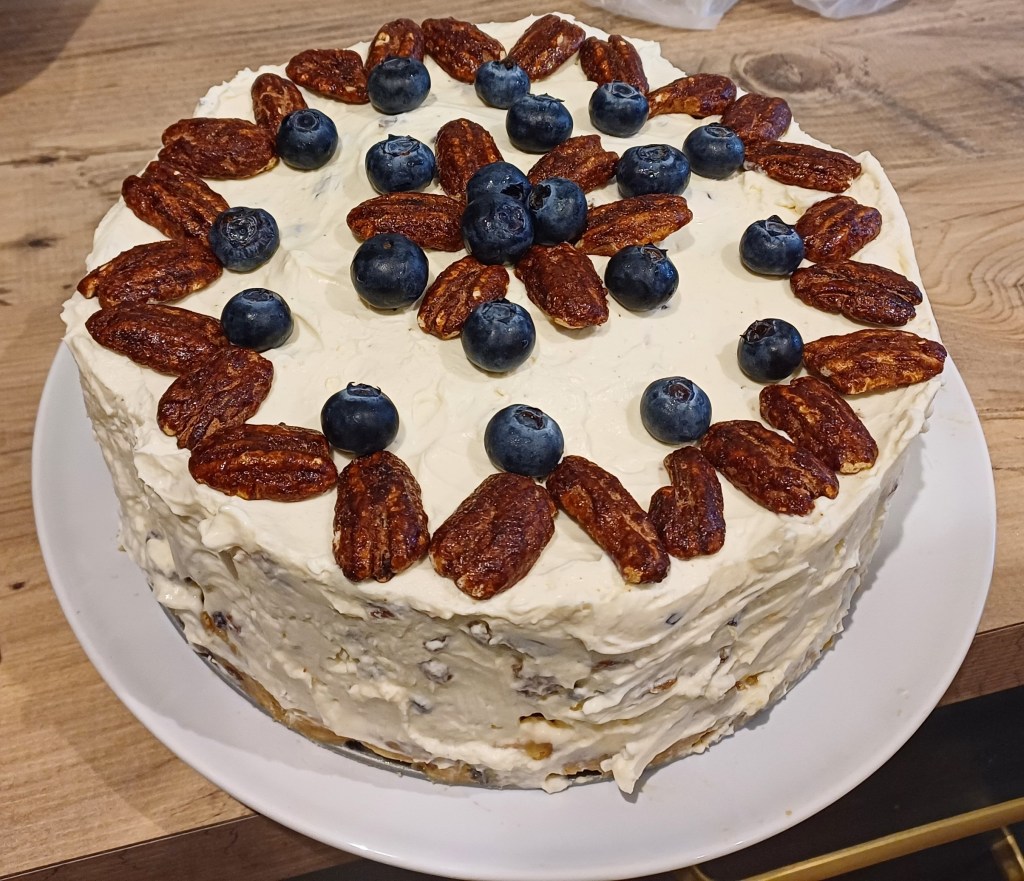
But it’s Christmas. I will finish with a picture of a mince pie cheesecake that I made last year. It was off the charts in terms of naughtiness and no inclusion of decorative blueberries and caramelised pecans was going to change that. But oh my gosh, for once a year? Worth the calories. Nom.
So eat, drink, be merry – enjoy the holidays, however you celebrate, with the people you love. This will do more for your health in the darkest days of winter than many a spa day or intensive exercise class can hope to. But there’s no harm in starting your new year’s resolution to eat more vegetables nice and early on December 25th.
Merry Christmas/Yule/Solstice everyone!

 Jo Priest - Natural Nutrition
Leave a comment